Beyond the Mountains: Meet the Bru–Van Kieu of Quang Tri
Khanh Chi
14:52 - 30.09.2026
Western Quang Tri is crisscrossed by roads leading deep into the mountains, passing villages tucked beneath the Truong Son Range. Along the way, you may catch glimpses of wooden stilt houses beneath the trees, beside streams and mountain slopes stretching westward.
But have you ever stopped for a little longer?
What if you took the time to talk with a Bru–Van Kieu villager, sit down for a local meal, listen to a traditional song, or spend a night in a stilt house?
Encounters like these reveal another side of western Quang Tri. Local food, traditional clothing, music, and stories passed down through generations are all part of this land.
Bru–Van Kieu cuisine is simple and closely connected to life in the mountains. Many dishes begin with ingredients that are familiar to people living in the highlands.
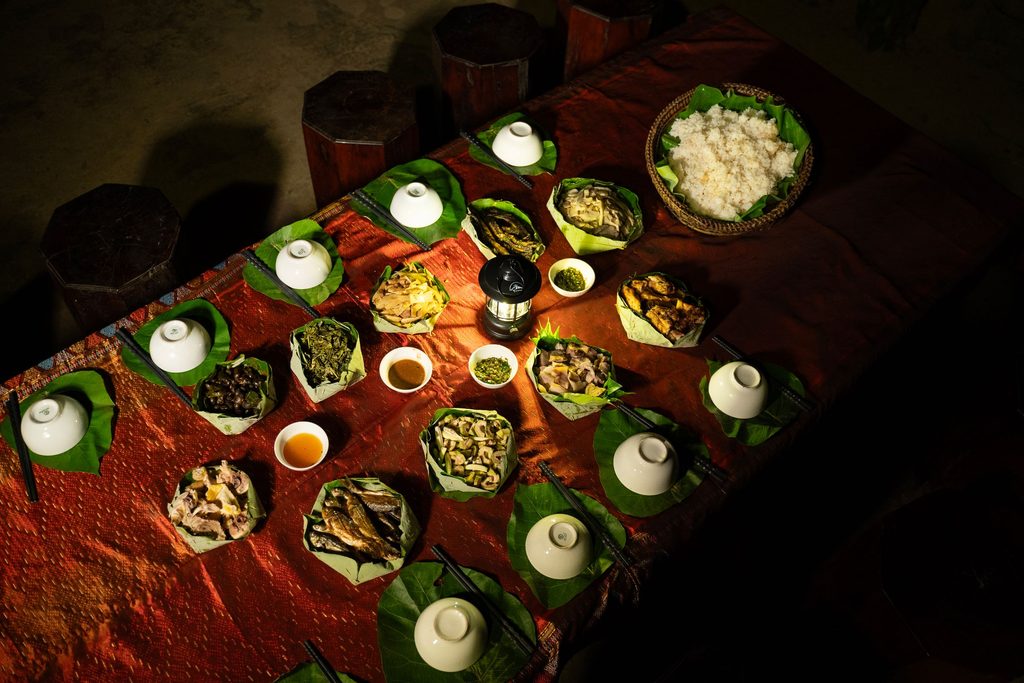
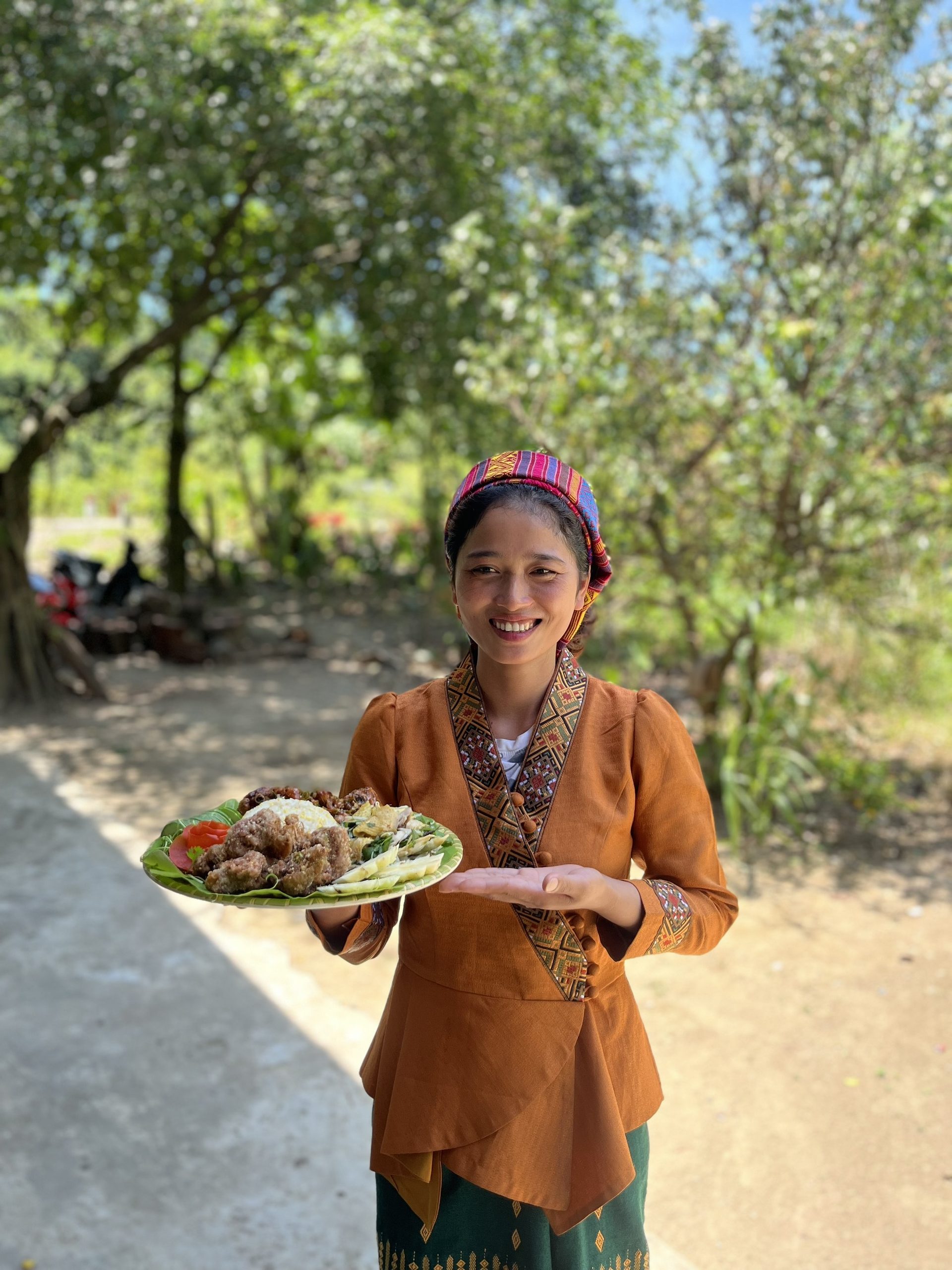
Local meals may include upland sticky rice, free-range chicken, grilled pork, stream snails, wild vegetables, bamboo shoots, and wild banana blossoms. Ingredients are often prepared simply to preserve their natural flavors.
One local specialty worth trying is cheo ca mat. The fish is cleaned, dried or smoked, then pounded with salt, chili, and other seasonings. The Van Kieu people often enjoy it with sticky rice or simple boiled dishes such as bamboo shoots, local pork, and chicken.
Sitting down to a meal like this, you begin to recognize the ingredients that are part of everyday life in the mountains. Some come from the fields, others from home gardens, while others are closely connected to the streams and forests.
A local meal, in its own way, tells the story of how the Bru–Van Kieu people make use of what the land provides.
Local meal prepared by Bru–Van Kieu villagers for visitors
Patterns and Colors in Bru–Van Kieu Traditional Dress
Traditional clothing is an important part of Bru–Van Kieu culture. Indigo, red, and black are the dominant colors, while patterns, beads, and jewelry add distinctive details to each outfit.
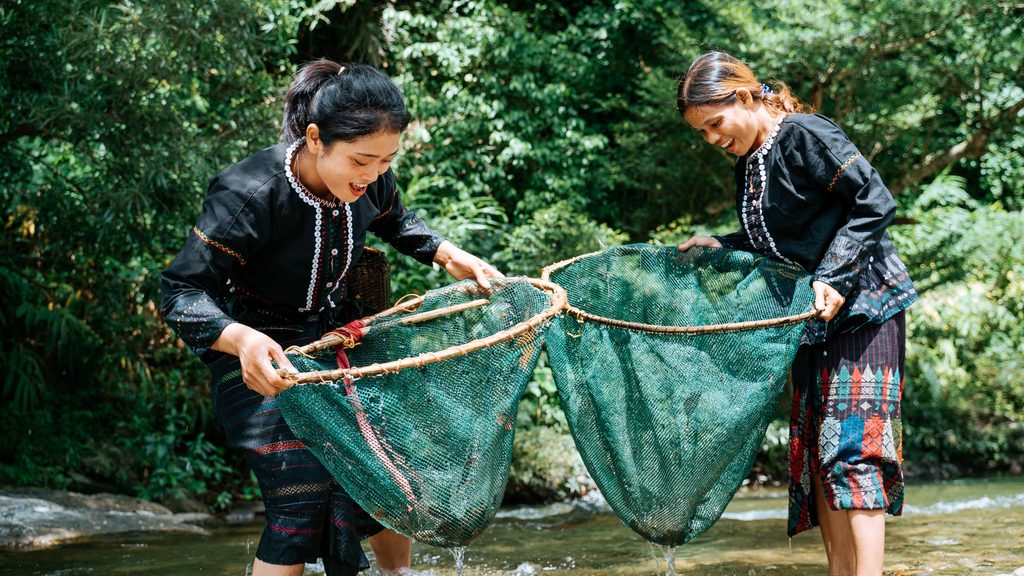
Women’s traditional clothing commonly includes a blouse, a wraparound skirt, a Dam headscarf, and a shoulder cloth worn across the body. Beaded blouses, silver coins, agate beads, silver bracelets, and metal chain belts are among the traditional accessories, especially for important occasions.
For men, one distinctive element of traditional dress is the loincloth.
In the past, loincloths were made from the bark of the sui tree found in the Truong Son forests. The bark was soaked in water, stripped into fibers, and dried. Women in the family then wove the fibers into cloth, which was dyed red and finished with black edging.
Later, as local communities began growing cotton and jute and spinning their own fibers into fabric, traditional clothing became more varied in both materials and styles.
Today, traditional clothing is mainly worn on important occasions, including rice-planting ceremonies, New Rice celebrations, weddings, funerals, and community cultural festivals. Modern clothing is more common in everyday life, although some older people still wear traditional clothes when staying at home or working in the fields.
From its colors and materials to its patterns, Bru–Van Kieu clothing preserves traces of the community’s way of life and cultural traditions over time..
Bru–Van Kieu women wearing traditional clothing while fishing in a stream
Sounds That Still Echo Through the Villages
Some aspects of a culture can only really be felt when you take the time to stay a little longer.
Music is one of them.
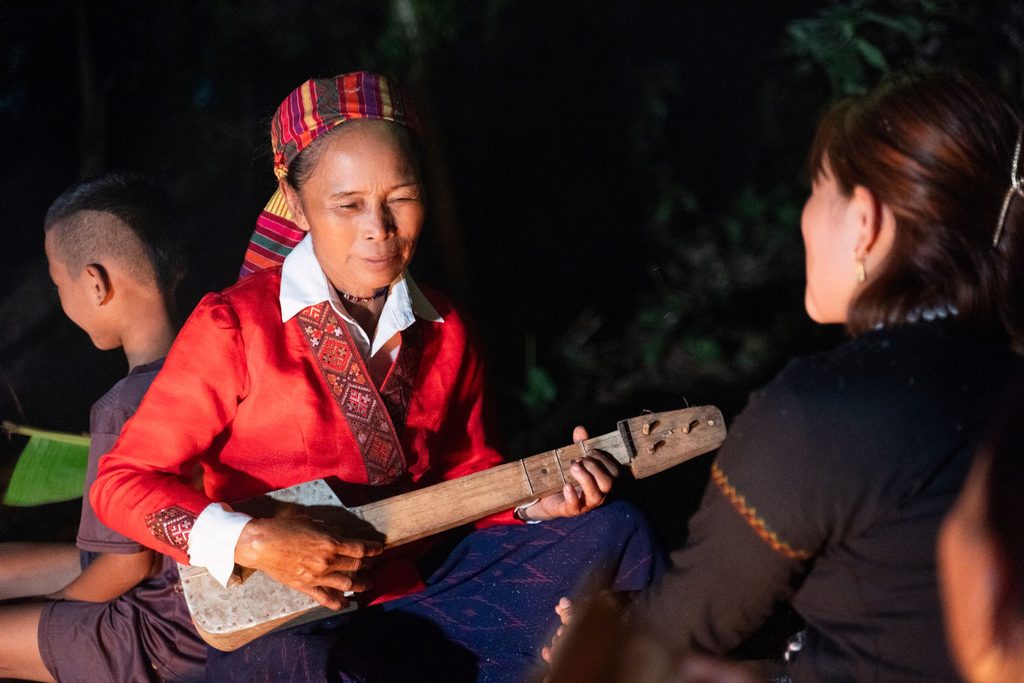
Gongs, bamboo mouth organs, and other traditional instruments are still preserved by Bru–Van Kieu artisans. Traditional folk songs are also passed down to younger generations through local cultural activities.
When the community gathers, music becomes part of the occasion, alongside stories, songs, and shared moments.
Agricultural festivals such as the New Rice Festival are linked to the harvest season. They are a time for the community to give thanks for the harvest while bringing families and relatives together.
For visitors, these sounds may be part of an evening or a single visit to a village. For the community, they are traditions that continue to be passed down through generations.
Amid the mountain wilderness, traditional Ta Lu music and singing still fill the air
Beside the Primary Forests of Dong Chau – Khe Nuoc Trong
In western Quang Tri, some Bru–Van Kieu villages lie alongside the primary forests of Dong Chau – Khe Nuoc Trong.
In some areas, there is still no access to the electricity grid. Mobile phone coverage can also disappear as you travel deeper into the mountains. Wooden stilt houses stand among the surrounding forest.
Life here follows its own rhythm.
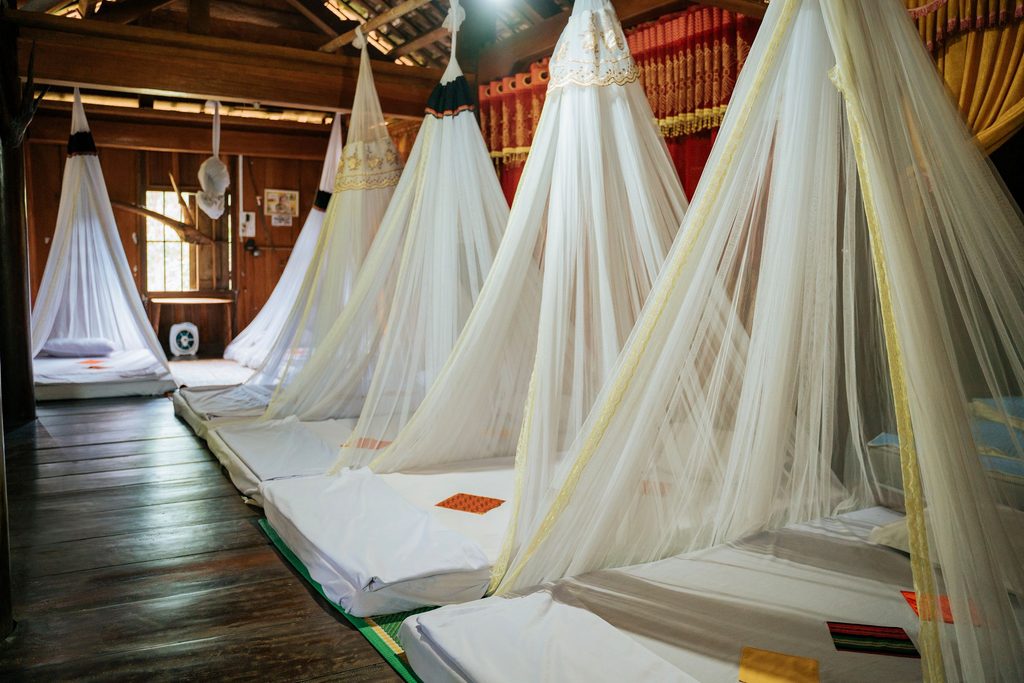
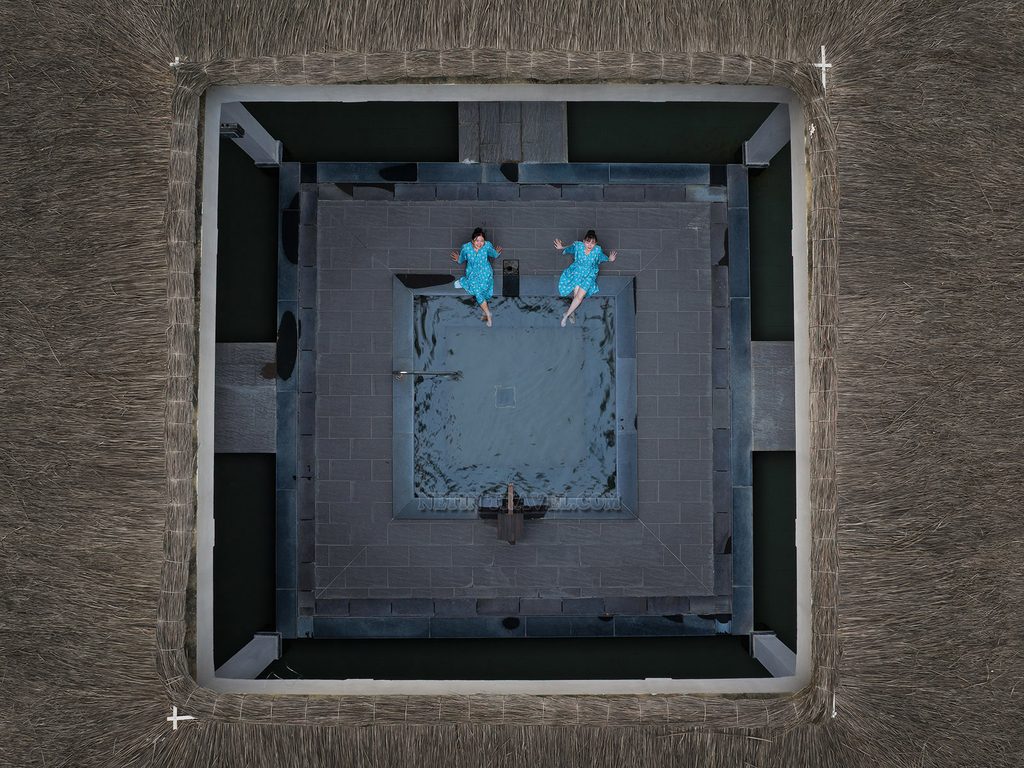
As tourism has reached these areas, local people have begun sharing more of what is familiar to them with visitors. Stilt houses have become homestays. Local dishes are served to guests. Traditional love songs offer a way for hosts and visitors to get to know each other.
On the Duong Cam Waterfall – Cong Troi Waterfall Adventure in Dong Chau – Khe Nuoc Trong Nature Reserve, Bru–Van Kieu villagers are also directly involved in tourism.
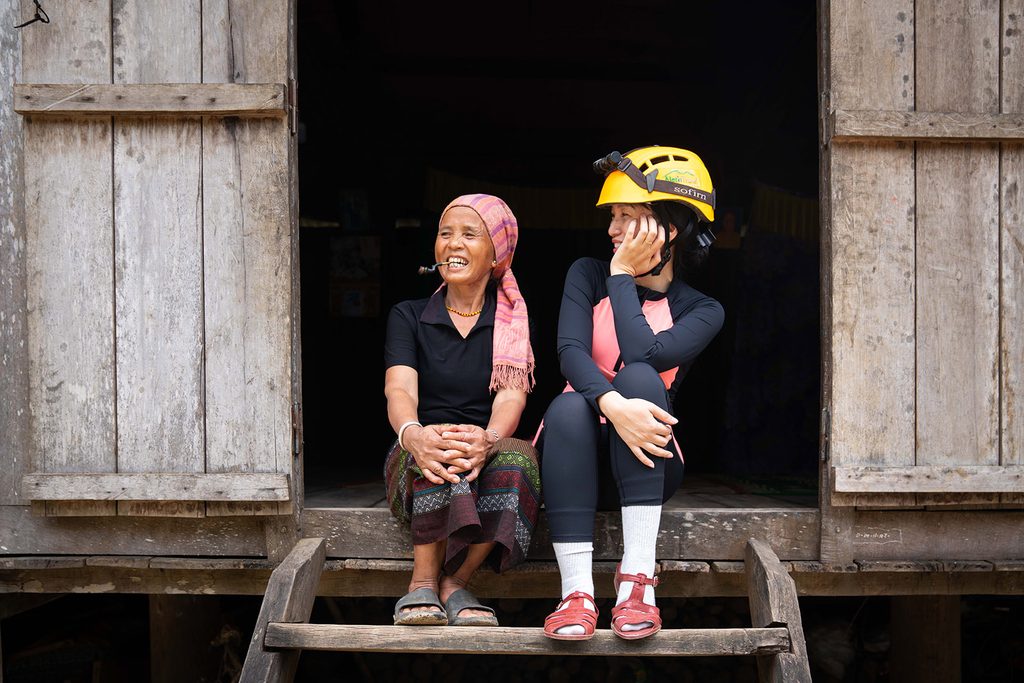
Some work as porters, accompanying visitors along the trail. Others prepare meals or welcome guests at homestays. From the very beginning of the journey, you therefore have a chance to meet the people who live in the place you have come to explore
A simple stilt house turned into a homestay for visitors in Dong Chau – Khe Nuoc Trong
Bru–Van Kieu People and the Stories of Cha Loi Cave
For the people living around Cha Loi Cave, the cave is connected to stories that have been passed down through the local community.
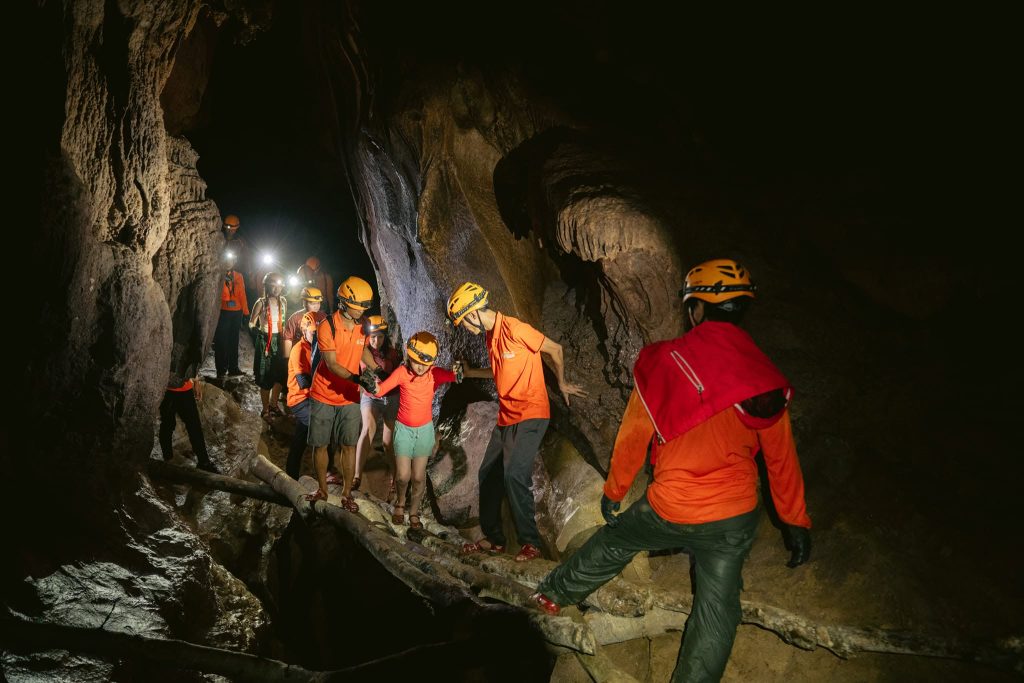
Bru–Van Kieu people have lived around the Cha Loi area for generations. In local memories, the cave is also linked to the years of war. Performances were once held inside the cave for soldiers. A temporary stage was set up deep inside the cave during a time when the lives of local people and soldiers were closely connected to the mountains and forests.
Today, these stories have become part of the experience of exploring Cha Loi.
Before heading deeper into the cave, the journey passes through Coi Da Village to meet local Bru–Van Kieu people.
Here, you can hear more about life in the village, Cha Loi, and stories that have been preserved through generations.
A cave can be seen with your eyes. But its stories need someone to tell them.
At Cha Loi, the people who have lived around the cave are the ones keeping part of its memory alive.
Meeting an elderly Bru–Van Kieu man and hearing old stories about Cha Loi Cave
Through the Villages on the Way to Pa Thien – Voi Mep
Pa Thien – Voi Mep lies in the mountainous west of Quang Tri. Bru–Van Kieu villages sit beneath the surrounding mountains.
Before the trekking trail takes you deep into the forest, this is already a lived-in landscape. Houses, farmland, and villages appear among the green slopes of the Truong Son Range.
As you go deeper, signs of human presence gradually become less visible. The trail narrows and the forest grows denser. The journey becomes more focused on the trek itself.
Yet beneath these mountains are villages that have existed for generations. Knowing this gives Pa Thien – Voi Mep a story that extends beyond the challenge of the trail.
You are traveling through a place where people live, traditions continue, and local culture remains part of everyday life.
The Bru–Van Kieu: Part of the Memory of Western Quang Tri
Some places stay with you because of a beautiful landscape. Others remain in your memory because of the people you meet along the way.
A journey through western Quang Tri might begin with a trail into the forest, a meal in a village, a story about Cha Loi Cave, or a night spent in a stilt house. Together, these experiences connect the region’s destinations in a natural way.
In Dong Chau – Khe Nuoc Trong, local villagers accompany visitors on journeys into the forest. In Coi Da, stories about Cha Loi continue to be passed on. At the foot of Pa Thien – Voi Mep, Bru–Van Kieu villages remain part of the living landscape of the western mountains.
And when you leave, what stays with you may not be how many kilometers you traveled or how many peaks you climbed.
It might be a meal.
A song.
A traditional outfit.
Or a story shared by someone you met in the mountains.
Meeting the Bru–Van Kieu people may be just one part of your journey. But sometimes, it is that part you remember longest when you think back on western Quang Tri.
Discover western Quang Tri with Netin Travel — and meet the people who make this land what it is.
Bru–Vân Kiều community tourism offers a closer look at local culture, village life, and nature in western Quang Tri. Discover what to expect and what to keep in mind before visiting a village.
Traveling in Quang Tri with kids? Find practical tips on choosing destinations, activities, travel times, breaks, and tours based on your child’s age and fitness.