For trekking enthusiasts, few things are more rewarding than witnessing a sea of clouds. Yet, it is never guaranteed. Sometimes, catching this spectacular sight comes down to a little luck. The right weather conditions must come together for clouds to form and blanket the valleys below.
Along the majestic Truong Son Range, the Pa Thien–Voi Mep trek offers a chance to witness clouds stretching across the rugged mountains. Layers of white mist create an almost dreamlike landscape, making the early morning climb especially memorable.
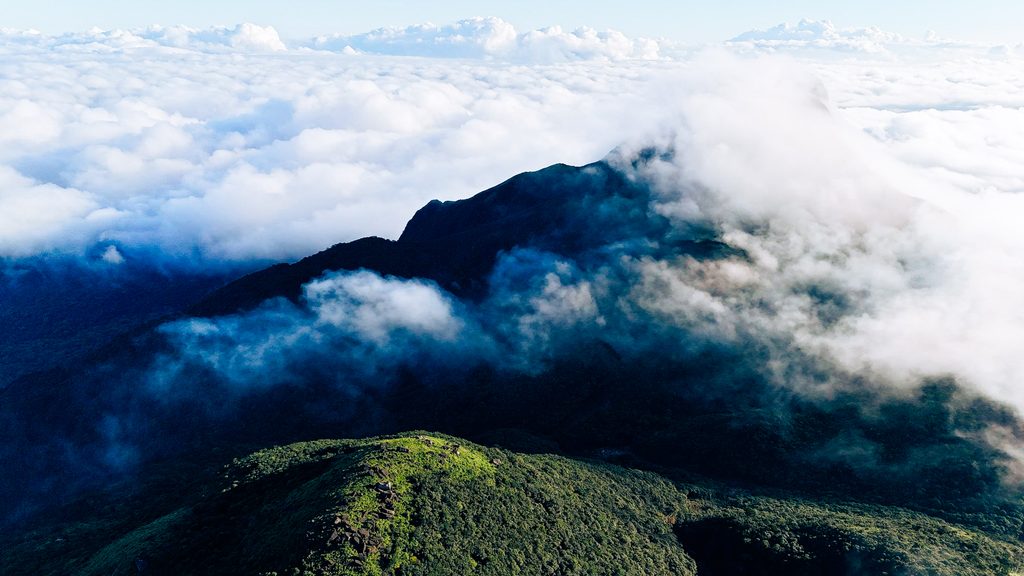
A sea of clouds blanketing Voi Mep Peak
Good preparation can improve your chances of seeing a sea of clouds. If you are planning a Pa Thien–Voi Mep trekking adventure, here are some practical tips to help you get ready.
Pa Thien and Voi Mep lie amid the Truong Son mountains in western Quang Tri, Vietnam. The trek takes you through forest trails and rugged mountain terrain. Along the way, you can experience the region’s natural beauty up close.
Pa Thien Peak stands at approximately 1,625 meters, while Voi Mep Peak reaches around 1,707 meters. From open viewpoints, you can look out across layers of mountain ridges stretching into the distance.
When conditions are right, low clouds may gather over the valleys. Mountain peaks rising above the white blanket create a striking scene. It is also a wonderful opportunity to capture memorable landscape photos.
October to April is generally considered a suitable period for trekking Pa Thien–Voi Mep. Within this window, October to February may offer better opportunities to see a sea of clouds.
However, clouds do not appear on every trek. Weather, humidity, and wind all affect cloud formation. Check the forecast close to your departure date so you can prepare accordingly.
Heavy rain, thunderstorms, and strong winds can make mountain trekking dangerous. If conditions look unfavorable, consult your tour operator before setting out.
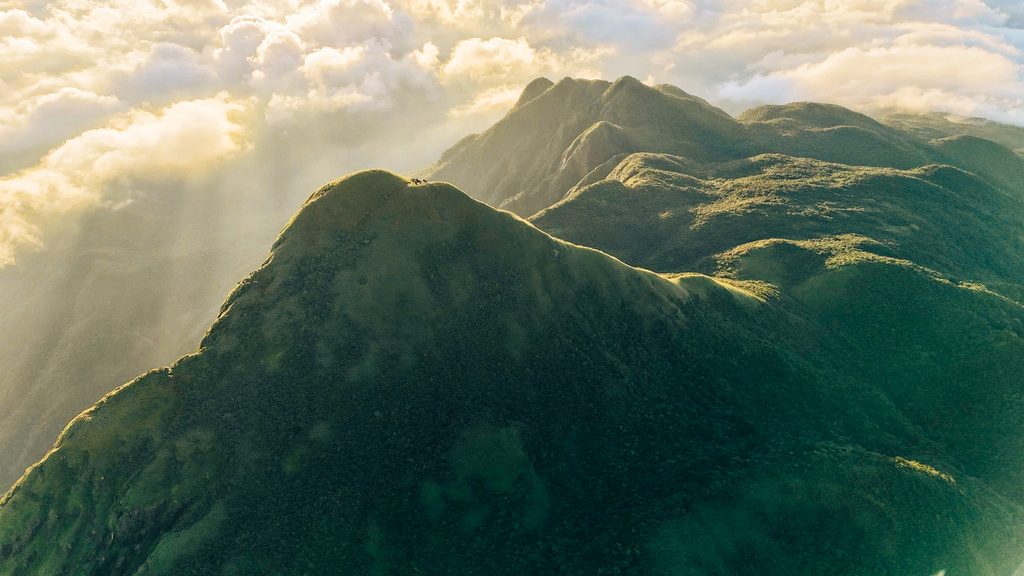
A sea of clouds over Voi Mep Peak in the golden morning sunlight
A sea of clouds forms when water vapor condenses into tiny droplets suspended in the air. Mountain slopes and valleys can create conditions that allow low clouds to gather. Several factors influence whether this happens.
Humidity
Moist air provides the water vapor needed for cloud formation. When moisture builds up in a valley, low clouds may develop. However, high humidity alone does not guarantee a sea of clouds.
Overnight temperatures
As temperatures drop overnight, the air may approach its dew point. When conditions are right, water vapor condenses into tiny droplets. This process can help low clouds form.
Wind conditions
Light winds may allow cloud layers to remain in place for a while. Stronger winds can move clouds quickly and change the view. There is no single wind speed that guarantees a sea of clouds.
Rain and fog
Rain can increase moisture in the surrounding environment. However, prolonged rainfall may also make forest trails slippery and dangerous. Dense fog or thick cloud cover can reduce visibility and hide the mountain peaks.
Consider several weather factors together when planning your trek. A favorable forecast can improve your chances, but it cannot guarantee a sea of clouds. Safety should always come first.
4. The Best Time of Day
Early morning is often the best time to look for a sea of clouds on Pa Thien. You can start the Pa Thien–Voi Mep trek the day before, spend the night at Pa Thien, and head out to watch the clouds early the following morning.
As daylight breaks, the rising sun may illuminate the mountain ridges and clouds below. This is also a beautiful time to take landscape photos.
Still, the clouds may not appear as expected. Bring warm clothing and follow your guide’s instructions. Stick to the agreed route and schedule to stay safe.
5. What to Pack
Mountain temperatures can be much lower than those at the foothills. Packing the right gear will help keep you comfortable throughout the trek.
Here are some essentials to bring:
Clothing: A warm jacket, a waterproof layer, and quick-drying clothes.
Footwear: Grippy trekking shoes and an extra pair of socks.
Lighting: A headlamp for early-morning activities.
Food and water: Drinking water and snacks suited to the length of the trek.
Photography gear: A phone or camera, a power bank, and a waterproof or moisture-resistant bag.
Personal essentials: A lightweight backpack, personal medication, and a basic first-aid kit.
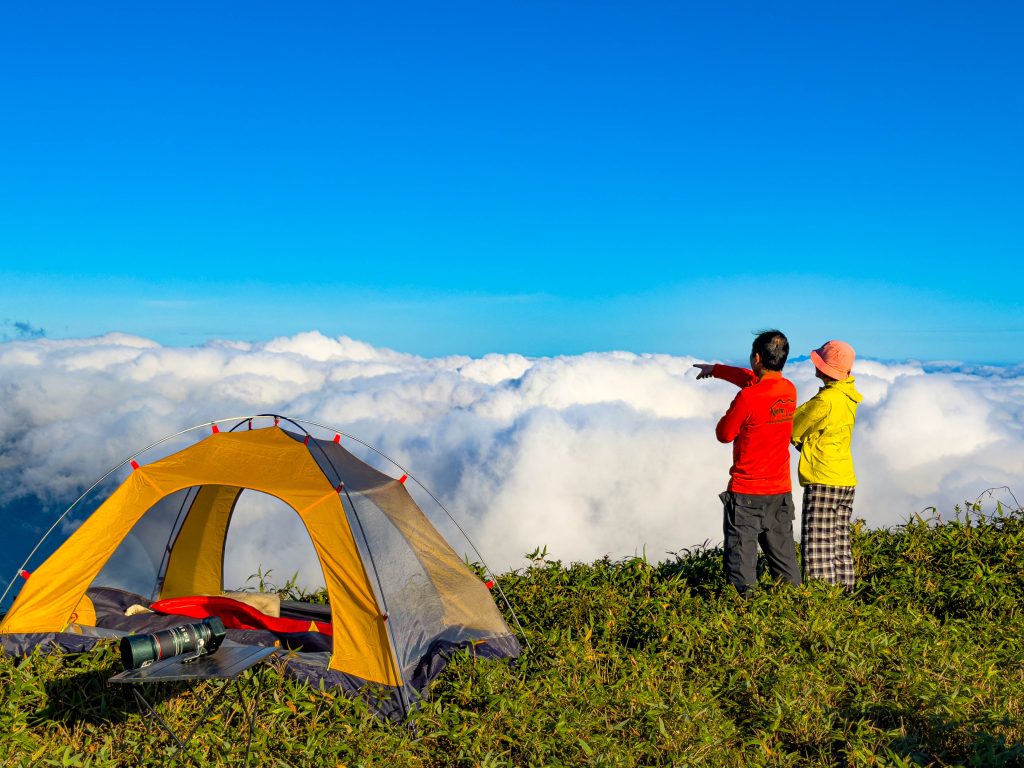
Some personal items to bring for cloud hunting: a jacket, camera, tent, and more
Bring what you need without making your backpack unnecessarily heavy. Check the packing list provided by your tour operator. Some equipment may already be included in the trip.
You do not need a professional camera to capture a beautiful sea of clouds. A smartphone with a good camera can also take impressive landscape photos.
Look for depth
Choose a viewpoint where several mountain ridges are visible. Include layers of mountains at different distances to give your photos a stronger sense of depth.
Make the most of the light
Early morning light often gives the mountains a soft, atmospheric look. Take photos before sunrise and again as the sun comes up. Try different angles to find the best composition.
Keep the horizon level
A level horizon can make landscape photos look more balanced. Try placing the sea of clouds in the middle or lower part of the frame. Adjust your composition to suit the shape of the mountain ridges.
Protect your gear
Mist and moisture can affect electronic equipment. Keep your camera or phone protected, and bring a cloth to wipe the lens. Check your batteries before setting off.
Stay safe while shooting
Never move too close to a cliff edge for a better angle. Choose stable ground and follow your guide’s instructions. No photo is worth risking your safety.
7. Trek Safely
Mountain terrain requires careful preparation and the ability to adapt to changing weather. Choose a tour operator familiar with the Pa Thien–Voi Mep route. Experienced local guides can assess trail conditions and adjust the itinerary when necessary.
If the weather turns bad, follow your guide’s advice. Do not push on toward the summit just to see the clouds. Changing the plan may be the safest option for everyone.
Help protect the natural environment throughout your trek. Take your rubbish with you, avoid damaging plants, and do not disturb wildlife. Keep noise to a minimum in sensitive areas.
The Pa Thien–Voi Mep trek offers a rewarding way to explore the mountains of western Quang Tri. A sea of clouds is never guaranteed, as conditions can change from day to day. With good preparation and a suitable itinerary, you can enjoy a safer and more memorable adventure.
Planning to trek Pa Thien–Voi Mep? Contact Netin Travel to learn more about available trekking itineraries and trip arrangements.
Beyond its underground river and spectacular limestone formations, Phong Nha Cave holds ancient Champa traces in Bi Ky Grotto. Discover the story behind these undeciphered inscriptions and find out how to explore this fascinating historical site.
Discover Phong Nha Botanical Garden, home to Gio Waterfall, Vang Anh Lake, ancient trees, wild orchids, and forest trails. Find highlights, walking routes, and practical tips for your visit.
Phong Nha’s limestone mountains and caves developed through millions of years of geological change. Discover how water dissolves limestone to create caves, mineral formations, and underground rivers.
Explore the distinctive cuisine of the Bru–Van Kieu people in western Quang Tri. Discover five local specialities, from chewy Ayoh cakes and grilled chicken with mac mat leaves to stream fish dishes, Doan Ket porridge and grilled beef with toasted rice.