Long Dai Ferry is more than a geographical landmark. It is a historic site that bears witness to the fierce fighting of Vietnamese soldiers and civilians along the legendary Truong Son Trail. During the Vietnam War, it served as a vital transport crossing, linking the northern rear with the southern front.
After many historical changes and administrative boundary adjustments, the site is now located in Quang Tri Province. It remains closely associated with the devastating memories of war and stands as an enduring symbol of the courage and sacrifice of past generations.
If you are interested in history, consider visiting Long Dai Ferry as part of your journey through Quang Tri. The visit will help you better understand the role of the Truong Son Trail in wartime transportation.
Where Is Long Dai Ferry?
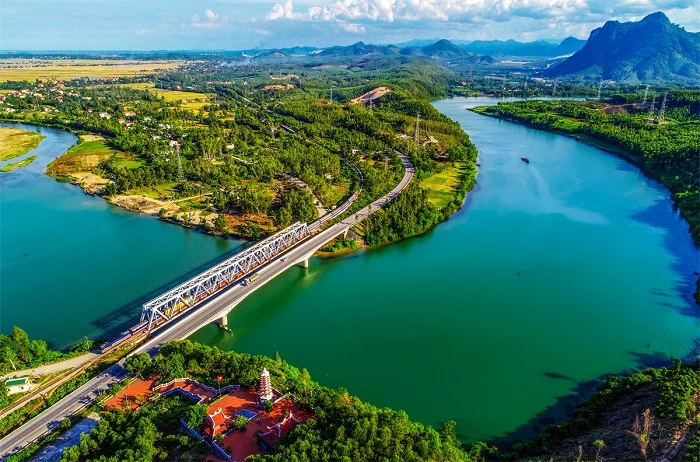
Long Dai Ferry is located in Truong Ninh Commune, Quang Tri Province (formerly Quang Ninh District, Quang Binh Province). It lies at Km 1004+810 on the eastern branch of the Ho Chi Minh Highway, at the confluence of the Kien Giang and Long Dai rivers.
To keep traffic moving along the Truong Son Trail, Long Dai Ferry was divided into two separate crossings:
- Ferry Crossing I: Located near the present-day Long Dai Bridge.
- Ferry Crossing II: Opened in January 1971 on the downstream section of the Long Dai River, about 500 meters from Ferry Crossing I.
The Long Dai River flows around the ferry site, running parallel to the Thong Nhat iron bridge beneath Than Dinh Mountain. During the war, the river was both a natural obstacle and a strategic asset. The ferry crossing therefore became a vital transport hub, connecting regional trade routes with military supply lines across the area.
Long Dai Ferry During the War
A Strategic River Crossing
Before 1965, Long Dai Ferry was part of National Highway 15A. As US bombing campaigns expanded across North Vietnam, the military took control of the ferry crossing for military operations. Its strategic location along the Truong Son Trail made it an important river crossing. Weapons, food, ammunition and personnel passed through here from the North to support the battlefields of Tri-Thien and southern Vietnam.
Keeping the Route Open Under Fire
From 1965 to 1972, Long Dai Ferry became one of the “fire zones” along the Truong Son Trail. US aircraft repeatedly bombed the area, while naval guns also targeted the crossing in an attempt to cut off supplies to the battlefield.
Despite the relentless bombing, military engineers, youth volunteers and frontline civilian workers remained at their posts. They repaired roads and cleared mines to keep the route open, guided by the motto: “Live by the bridge and road; die with courage and resolve.”
The Sacrifice of Those Who Served
The convoys heading to the front came at the cost of many lives and the loss of countless young years. On September 19, 1972, a US laser-guided bombing strike hit the Long Dai Ferry area. Fifteen members of Company C130 were killed instantly while transporting supplies. All of them came from Kien Xuong District, Thai Binh Province.
Four days later, another soldier died from his injuries, bringing the total number of Thai Binh youth volunteers who died here to 16.
Long Dai Ferry Today: A Place of Remembrance
More than half a century later, the historic ferry crossing no longer serves commercial transport. It has become a place where memories of the past are preserved. On September 9, 2025, Long Dai Ferry Crossing II was recognized as a National Historical Site.
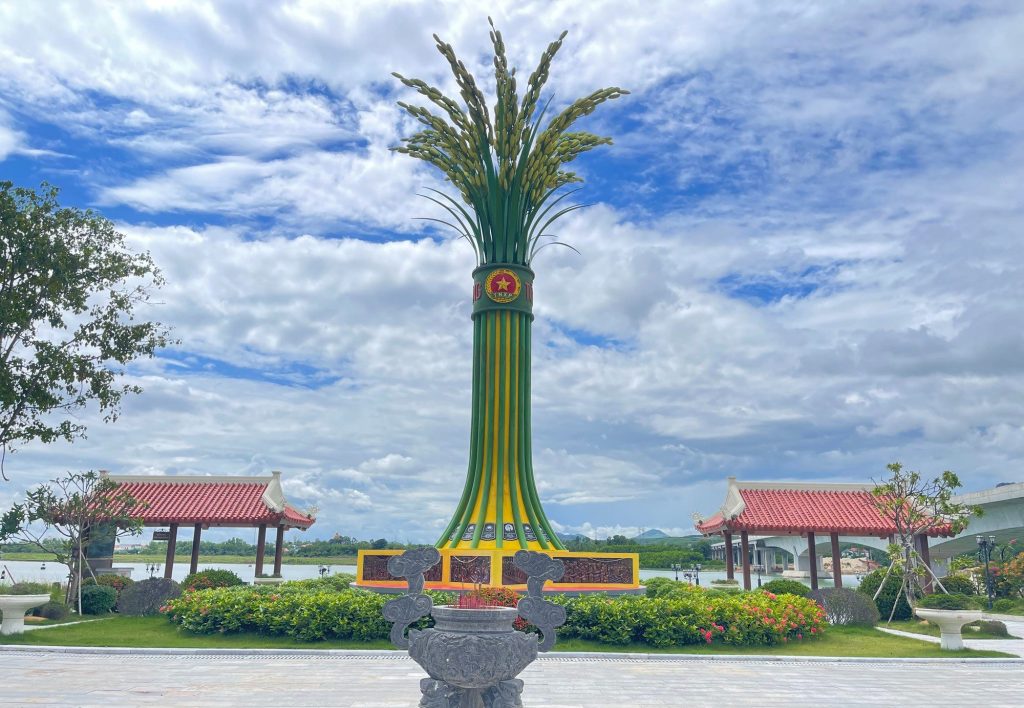
To honor the fallen, the Truong Son Martyrs’ Memorial Temple – Long Dai Ferry was built on a breezy hill overlooking the former crossing. One of its most notable features is a memorial shaped like a bundle of rice stalks, consisting of 16 stalks. The monument stands 16 meters tall, with each stalk weighing 1.6 tonnes. It serves as a solemn tribute to the 16 young men from Thai Binh who lost their lives here.
Today, the site has become an important place for educating younger generations about Vietnam’s revolutionary history.
On October 14, 2026, Long Dai Ferry Crossing II received a certificate recognizing its historical significance from the Vietnam Records Organization. The recognition honors the site’s historical value and the unwavering spirit of the fallen youth volunteers. It also pays tribute to their contributions and promotes the Vietnamese tradition of gratitude and remembrance among local authorities and communities.

Explore Quang Tri Around Long Dai Ferry
Located along the eastern branch of the Ho Chi Minh Highway, Long Dai Ferry is a meaningful stop for travelers interested in spiritual tourism and the history of former battlefields in Central Vietnam.
Visitors can combine a trip to Long Dai Ferry with other well-known historical sites in Quang Tri, including Truong Son National Martyrs Cemetery, Quang Tri Ancient Citadel and Vinh Moc Tunnels. You can also combine your visit with one of the following tours:
- Dong Hoi – General Vo Nguyen Giap Memorial House – Than Dinh Mountain – Long Dai Ferry – Truong Son Martyrs’ Temple
- Explore Cha Loi Cave in One Day
- Explore Cha Loi Cave: 2 Days, 1 Night
- Discover Quang Binh in 3 Days, 2 Nights
- Explore Western Quang Tri
From the memorial temple, visitors can look out over the peaceful Long Dai River and the sturdy iron bridges. The view reflects the remarkable recovery of a region once devastated by bombing. It also reminds visitors to cherish the peace and independence enjoyed today.
If you would like to visit Long Dai Ferry and other destinations in Quang Tri, contact Netin Travel. Our team will help you plan an itinerary that suits your needs.
>> Read more:


CÙNG NETIN CHỌN CHUYẾN ĐI
Một hành trình phù hợp với bạn
Cho chúng tôi biết ngày đi, nơi lưu trú và số thành viên trong nhóm để được tư vấn.
Gọi tư vấn · 0912 356 056 ↗Deprecated: file_exists(): Passing null to parameter #1 ($filename) of type string is deprecated in /home/nhnetgrt/public_html/wp-includes/comment-template.php on line 1624